
Choosing the right Shopify SEO tool in 2026 is no longer straightforward. There are dozens of SEO apps, free tools, and AI-driven platforms promising results. For most Shopify store owners, the challenge is not access to tools, but knowing which ones actually improve your SEO.
This guide breaks down the best Shopify SEO tools for 2026, covering both free and paid options, and how to use them effectively.
Built-In Shopify SEO Features And Their Limits
Before installing any SEO app for Shopify, it is important to understand what Shopify already offers. Many store owners overlook built-in SEO features and end up duplicating work. Shopify provides a solid SEO foundation, but it is not a complete solution for growing stores.
What built-in SEO features Shopify already offers
Shopify includes several basic SEO features directly in the Shopify admin:
- Editable meta titles and meta descriptions
- Clean URL structures
- Automatic sitemap generation
- Basic redirects for broken links
- Mobile-friendly themes
These built-in SEO features cover the essentials for simple SEO. They help search engines crawl and index your Shopify store effectively.
Where built-in SEO falls short for growing stores
As your store grows, limitations become clear. Shopify does not offer deep technical SEO tools or automation.
Common gaps include:
- Limited structured data control
- No advanced SEO audit or SEO scanner
- Manual optimisation for large catalogues
- No built-in keyword research tool
Minimal SEO automation
According to Backlinko, pages with optimised on-page SEO can see up to 32% higher organic traffic compared to unoptimised pages.
When a Shopify SEO app becomes necessary
A Shopify SEO app becomes essential when you need to scale SEO tasks or fix complex SEO issues.
You should consider an SEO app when:
- Your product catalogue grows beyond 50–100 items
- You need technical SEO fixes at scale
- You want to automate repetitive SEO tasks
- You need better SEO metrics and reporting
How To Choose The Right Shopify SEO Tool
With so many Shopify SEO apps available, choosing the right one depends on your store’s size, goals, and internal resources. Instead of chasing the “best SEO app”, focus on what solves your specific SEO problem.
Key SEO features to look for in a Shopify SEO app
Not all SEO tools offer the same value. Focus on features that directly improve your store’s SEO.
| Feature | Why it matters |
|---|---|
| On-page SEO tools | Helps optimise titles, meta description, and content |
| Technical SEO features | Fixes crawl errors, broken link issues, and schema |
| SEO automation | Saves time on repetitive SEO tasks |
| SEO audit and SEO checker | Identifies SEO issues quickly |
| Image optimisation app | Improves page speed and rankings |
If you are just getting started with your Shopify store
If you are early on, your focus should be clarity, not complexity. You are likely still figuring out how SEO works and how your Shopify store appears in search results. At this stage, a simple SEO app for Shopify is enough.
You do not need advanced SEO tools yet. What matters is:
- Learning how to write better meta descriptions
- Fixing basic SEO issues
- Understanding how your store’s SEO is performing
Using too many tools here often creates noise rather than progress. A single, clear SEO tool will help you build confidence faster.
If your SEO feels inconsistent or hard to manage
If you are seeing some traffic but results feel unpredictable, your challenge is consistency. You might be updating pages manually or guessing what to improve next.
This is usually the point where SEO starts to feel time-consuming.
This is where a stronger Shopify SEO app makes a difference. Look for tools that:
- Give clear SEO suggestions
- Help automate repetitive SEO tasks
- Connect with Google Search Console
Organic search drives a large share of traffic. BrightEdge reports 53% of website traffic comes from organic search, which is why consistency matters at this stage.
If your product catalogue is growing quickly
If you are adding more products and pages, manual SEO becomes difficult to manage. You may notice things slipping, such as missing meta descriptions or duplicate content. This is not a strategy issue, it is a scale issue.
At this point, you need a Shopify SEO tool that helps you stay consistent across your entire store.
Focus on:
- Bulk editing and automation
- Technical SEO features
- Structured data support
If your tools cannot keep up with your growth, your SEO will slow down.
If you are responsible for SEO performance
If you are managing SEO as part of your role, your focus shifts from tasks to results. You are not just making changes. You are expected to improve organic traffic and track performance clearly.
You need tools that:
- Provide reliable SEO metrics
- Show clear progress over time
- Support better decision-making
Google emphasises the importance of measurable improvements and transparency in SEO.
If your tools do not give you confidence in the data, they will hold you back.
Best Free Shopify SEO Tools For 2026
Free SEO tools are a great starting point for Shopify store owners. They help you diagnose SEO issues and improve your site’s SEO without upfront investment. However, they work best when used as part of a broader SEO strategy.
1. SEOLab: All in #1 SEO
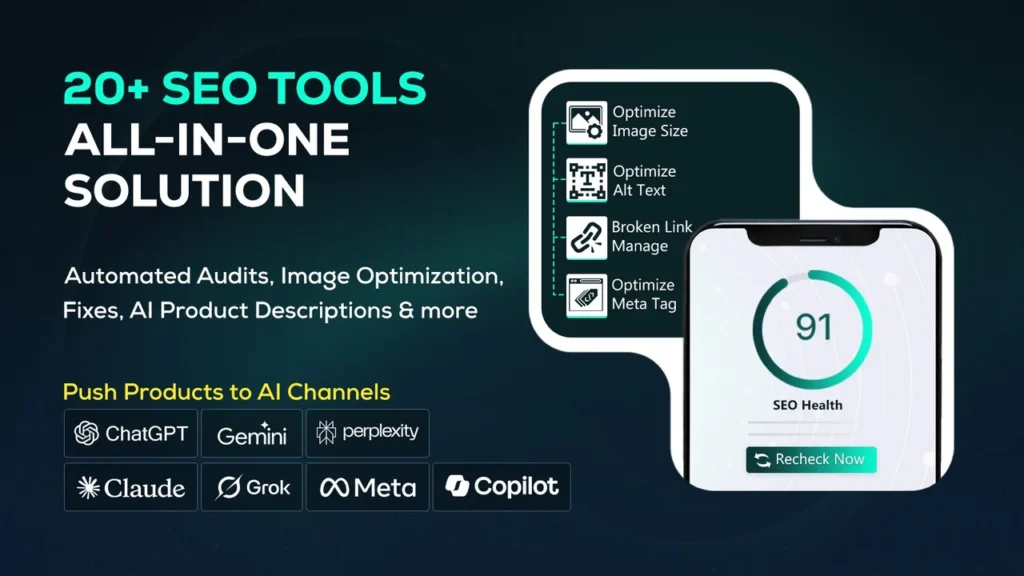
If you want one place to manage most of your SEO, this tool keeps things straightforward. It covers the essentials without forcing you to jump between multiple apps.
Key features:
- Meta tags and alt text optimisation
- Structured data (schema) support
- Broken link detection Indexing support
- Built-in keyword research Speed optimisation
It suits store owners who want visibility into their SEO without overcomplicating the process. Everything is centralised, which makes it easier to stay consistent.
2. Tiny SEO Speed Image Optimizer
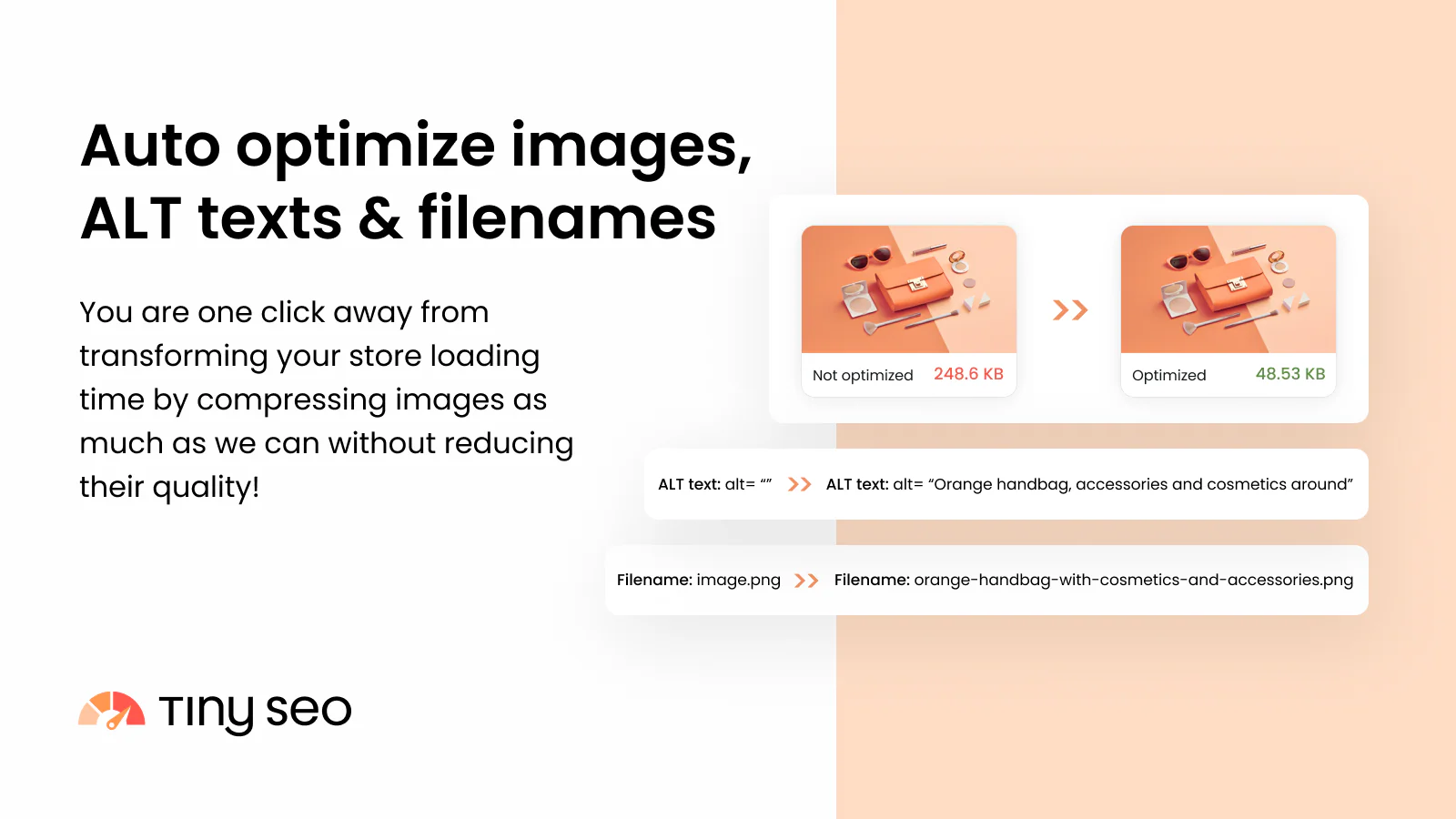
If your store relies heavily on visuals, this tool focuses on improving how quickly your pages load.
Key features:
- Image compression and minification
- Page speed optimisation
- Support for AI search and AEO
- Traffic-focused improvements
It is particularly useful if your site feels slow or image-heavy. Faster pages tend to keep users engaged longer and support better SEO performance.
3. Tapita AI SEO Optimizer & Speed
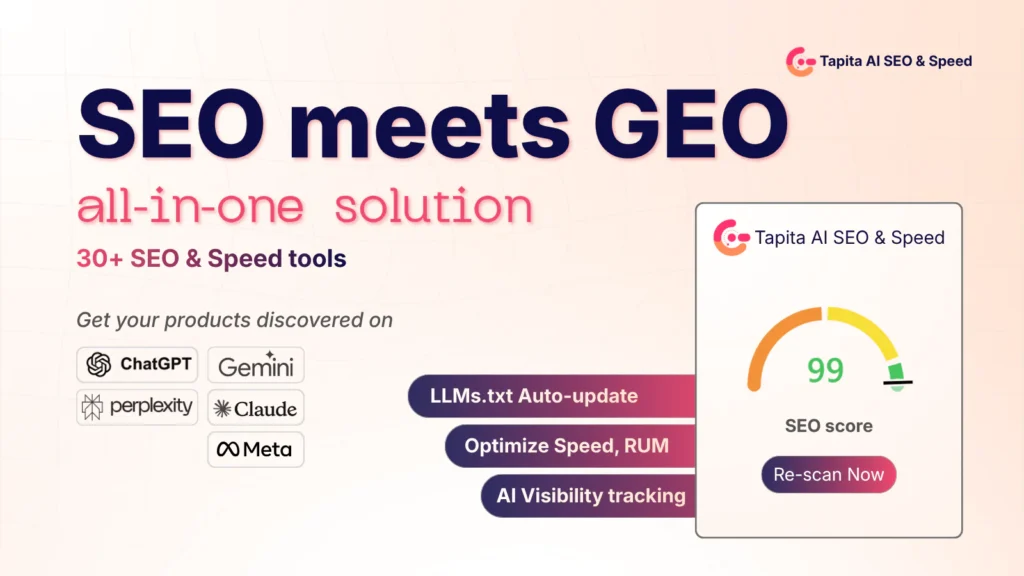
If you want a mix of traditional SEO and newer AI-driven features, this tool offers more flexibility.
Key features:
- On-page SEO optimisation AI SEO and AEO tools
- Image SEO features
- Speed optimisation GEO support
It works well if you are starting to take SEO more seriously and want a tool that can grow with your needs.
Best Paid Shopify SEO Apps For Serious Growth
Paid Shopify SEO apps are designed for scalability. They help automate SEO tasks, fix technical SEO issues, and improve organic traffic more efficiently. For growing Shopify stores, they are often worth the investment.
1. Plug In SEO
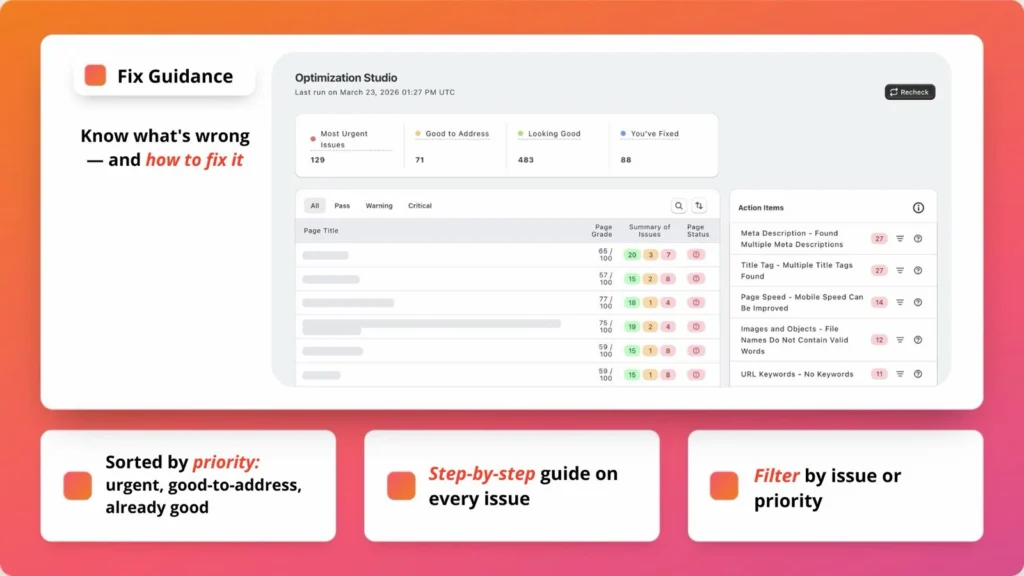
If you want a structured, all-in-one SEO tool, Plug In SEO is often the first upgrade from a free SEO app.
Key features:
- Automated SEO audits and monitoring
- Technical SEO cleanup and issue detection
- SEO suggestions and alerts
- Ongoing performance checks
It works well if you want visibility into your store’s SEO without manually checking everything. The automated audits help you stay on top of issues before they affect performance.
Pricing typically ranges from $29.99 to $99.99 per month, depending on how much support and automation you need.
2. Booster SEO
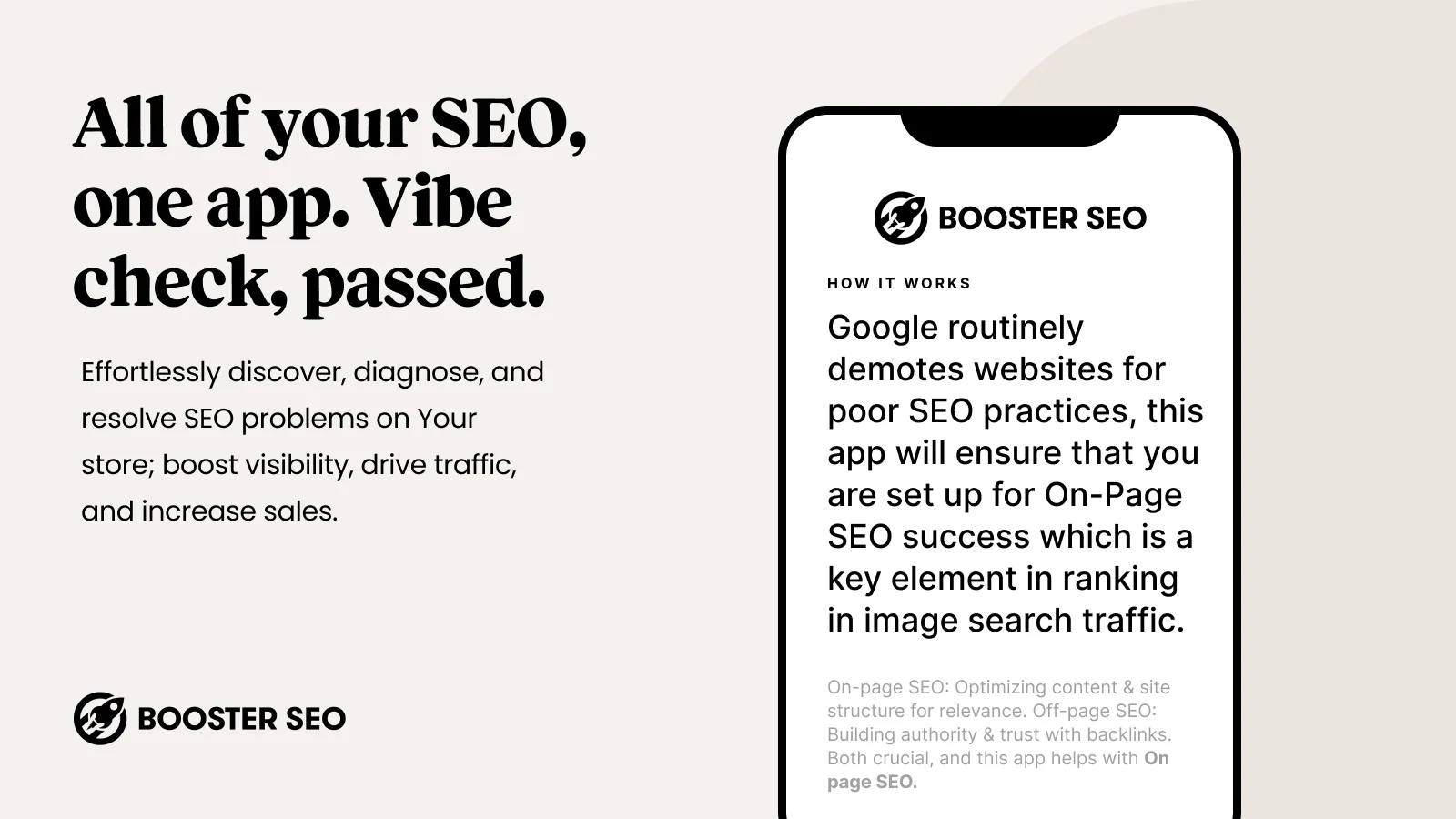
If your priority is growth with minimal hands-on work, Booster SEO leans heavily into automation.
Key features:
- Image optimisation and compression
- Page speed improvements SEO automation tools
- Meta tag optimisation at scale
It is a strong fit if you want to improve your store’s SEO in the background. Most of the work happens automatically, which makes it easier to maintain consistency as your store grows. Paid plans usually start around $39 per month.
3. SEO Manager
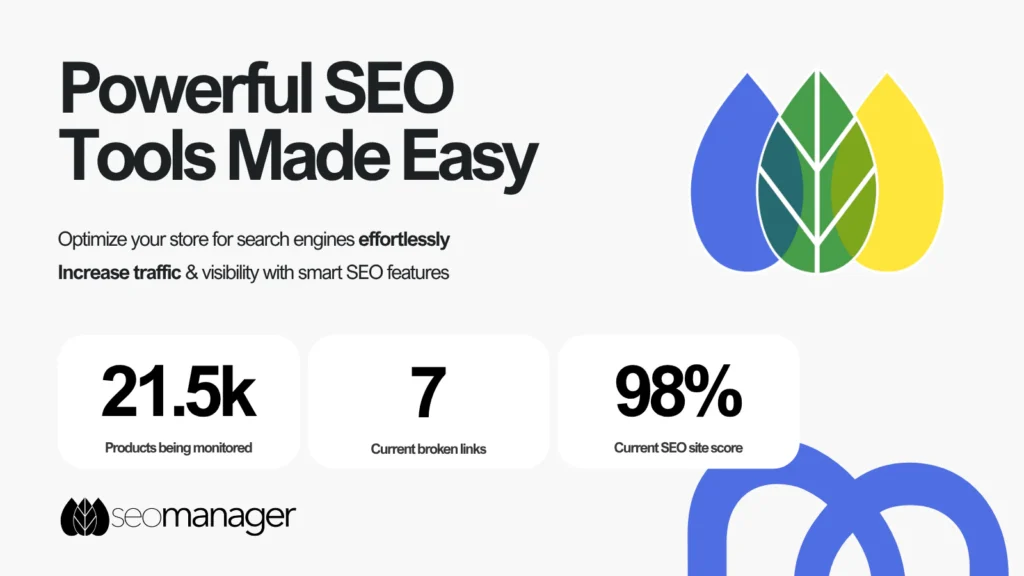
If you prefer more control over your SEO, SEO Manager gives you deeper access to on-page optimisation.
Key features:
- Advanced meta tag and content control
- Detailed SEO insights and reporting
- Integration with Google Search Console
- Custom SEO settings for products and pages
It suits store owners or SEO managers who want to fine-tune their SEO rather than rely on automation alone. You can adjust specific SEO elements and track how changes impact performance.
Turn your SEO tools into real growth
How Shopify SEO Tools Actually Improve Organic Traffic
SEO apps can feel abstract until you understand how they impact real results.
The goal is simple: improve your store’s visibility in search engines and drive more organic traffic.
On-page SEO improvements that drive rankings
SEO tools help optimise key SEO elements such as:
- Meta description and titles
- Product page content
- Internal linking
These improvements make your pages more relevant to search queries.
Technical fixes that impact visibility
Technical SEO issues can block your growth without you noticing. SEO tools help:
- Fix broken link errors
- Improve site speed
- Add structured data
Google reports that 53% of mobile users leave a site if it takes longer than 3 seconds to load.
SEO automation and time savings for teams
Automation reduces manual SEO work significantly.
Instead of editing hundreds of pages, SEO apps can:
- Bulk update meta tags
- Automatically generate schema
- Run continuous SEO audits
This is especially useful for SEO managers and growing teams.
Are Shopify SEO Apps Enough On Their Own
Shopify SEO apps are powerful, but they are not a complete SEO solution. Relying on a single SEO app can limit your long-term growth.
The key is understanding where they fit within your broader SEO strategy.
When a Shopify SEO app is enough
A Shopify SEO app can be enough if:
- You run a small or new Shopify store
- Your SEO needs are mostly on-page
- You want a simple SEO overview and guidance
In these cases, a well-chosen SEO plugin can cover most essentials.
When you need external SEO tools
As your store grows, external tools become essential. You will need them for:
- Advanced SEO research
- Competitor analysis
- Deeper technical SEO insights
Combining Shopify apps with external platforms
The most effective setup combines both.
| Component | Role in your SEO |
|---|---|
| Shopify SEO app | On-page SEO and automation |
| External tools | Research, analytics, technical insights |
This combination gives you a more complete and scalable SEO system.
External SEO Tools That Complement Shopify Apps
Shopify apps handle a lot, but external tools add depth and insight.
They help you move from basic SEO to a more strategic approach.
Google Search Console for performance tracking
Google Search Console is essential for any Shopify store.
It helps you:
- Monitor search visibility
- Identify indexing issues
- Track keyword performance
It is one of the most valuable free tools available.
Google Analytics for behaviour insights
While Search Console shows visibility, Analytics shows what users do.
- You can track:
- Conversion paths
- Bounce rates
- Engagement metrics
This helps connect SEO efforts to real business outcomes.
Research tools for keyword planning
Keyword research tools help you build a stronger SEO strategy.
Use them to:
Discover new keyword opportunities
- Analyse competitors
- Plan content
- These tools are critical for long-term SEO growth.
Speed and performance tools
Page speed directly affects rankings and user experience.
Use tools to:
- Diagnose loading issues
- Improve Core Web Vitals
- Optimise images and scripts
Content and PR tools for link building
SEO is not just technical. Authority matters too. Content and PR tools help you:
- Build backlinks
- Promote content
- Increase brand visibility
Final Thoughts On Choosing The Best Shopify SEO Tools
Choosing the right Shopify SEO tool is less about finding the “best SEO app” and more about building the right combination of tools for your store.
The goal is to create a system that supports your growth, not just your current needs.
Focus on outcomes, not just features
Many SEO apps offer similar features. What matters is how they help you improve your SEO and drive results.
Look for tools that:
- Solve real SEO problems
- Save time through automation
- Support long-term SEO strategy
Start simple and scale your SEO stack
You do not need every tool from day one.
Start with:
- A reliable Shopify SEO app
- A free tool like Google Search Console
Then expand as your store grows.
Building a long-term SEO strategy for your
Shopify store SEO is a long-term investment. Tools support your efforts, but strategy drives results.
Focus on:
- Consistent optimisation
- Strong SEO practices
- Ongoing SEO research
Need Help Choosing The Right Shopify SEO Tools
Not sure which Shopify SEO tools are right for your business? You are not alone. Many Shopify store owners struggle to build the right SEO setup.
At Webfuel Digital, we help brands choose, implement, and optimise the best Shopify SEO tools for real growth. Whether you need help selecting a Shopify SEO app or building a complete SEO strategy, our team can guide you.
If you want to improve your SEO and drive more organic traffic, get in touch with us today.