
Many ecommerce businesses invest heavily in product development, advertising, and website design but still struggle to generate consistent organic traffic. The problem often isn’t the products themselves, but it’s that potential customers can’t find them in search engines.
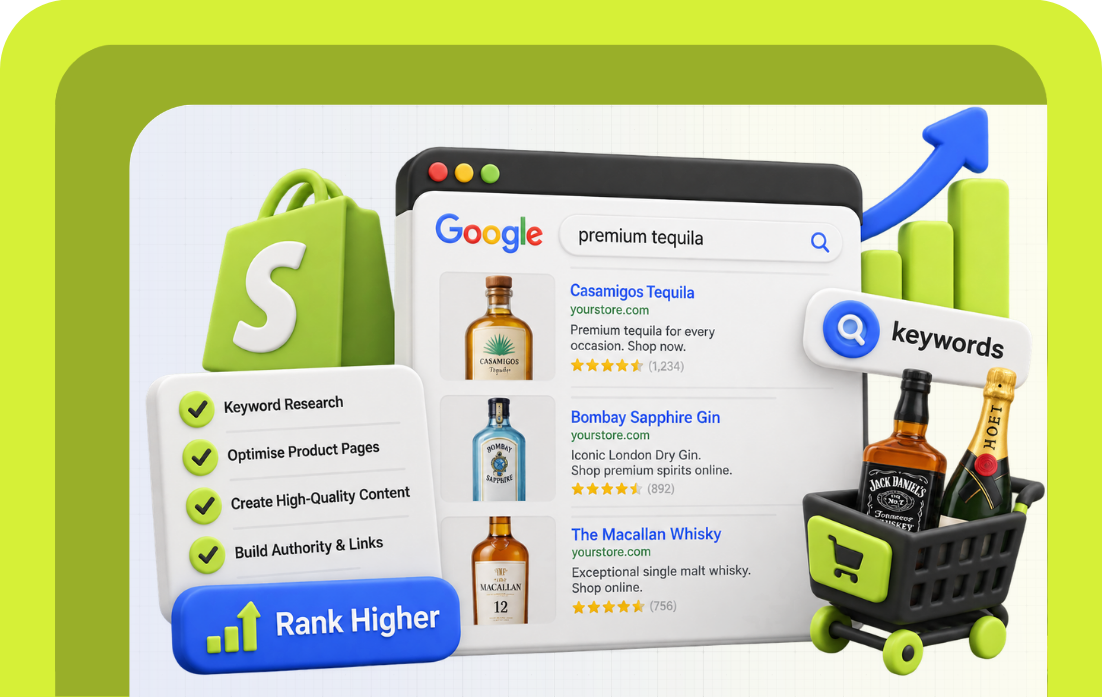
SEO for ecommerce websites is the process of improving your visibility in Google Search and other search engines so shoppers can discover your products when they’re actively looking to buy. A strong ecommerce SEO strategy helps increase rankings, attract qualified traffic, improve user experience, and ultimately drive more sales without relying entirely on paid advertising.
The opportunity is significant. According to BrightEdge, organic search drives approximately 53% of all website traffic, making it one of the largest digital marketing channels available to online businesses.
Additionally, Backlinko found that the first result in Google Search receives an average click-through rate of 27.6%, highlighting the value of strong rankings. Meanwhile, Google’s own research continues to emphasize page experience, site structure, and content quality as critical factors for search visibility.
This guide covers practical strategies to improve SEO across your ecommerce site.
Table of Contents
What Competitors Get Wrong (And Where You Can Win)
Many ecommerce SEO articles focus on isolated tactics rather than building a complete search engine optimization strategy. While tips such as adding keywords to product descriptions or building backlinks are useful, they rarely address how all SEO elements work together.
This creates an opportunity for ecommerce businesses willing to take a more structured approach.
Overemphasizing keywords without understanding search intent
Many guides encourage businesses to target high-volume keywords without considering what users actually want. Search engines have become much better at understanding search intent, meaning a keyword’s relevance matters more than simple keyword placement.
For example, someone searching for “best running shoes for beginners” has different needs than someone searching for “buy men’s running shoes size 10.” Creating content that matches intent helps improve rankings and conversion rates.
Ignoring category pages as major ranking opportunities
Competitor content often focuses heavily on individual product pages while overlooking category pages.
In reality, category pages frequently rank for broader commercial keywords that drive significant organic traffic. A well-optimized ecommerce category page can attract visitors researching products before they’ve chosen a specific item.
Strong category page optimization should include:
- Unique introductory content
- Relevant keywords
- Internal links
- Helpful filtering options
- Clear navigation
- Optimized meta descriptions
Treating technical SEO as an afterthought
Many ecommerce websites suffer from crawlability, indexing, and duplicate content issues that prevent search engines from fully understanding the site.
Without a strong technical SEO foundation, even excellent content may struggle to rank.
Focusing on traffic instead of revenue
Not all traffic generates sales.
Successful ecommerce SEO prioritizes keywords, pages, and optimization efforts that attract potential customers with buying intent rather than simply increasing visitor numbers.
The businesses that consistently outperform competitors focus on improving visibility throughout the customer journey from initial research to final purchase.
Building A Scalable Ecommerce SEO Strategy
Before making individual SEO improvements, it’s important to create a strategy that can scale as your ecommerce website grows.
A structured SEO strategy helps ensure every optimization effort supports long-term business goals instead of producing disconnected results.
Align SEO goals with business objectives
Your SEO strategy should support measurable business outcomes.
Examples include:
- Increasing revenue from organic search
- Growing visibility for high-margin products
- Expanding into new product categories
- Reducing dependence on paid advertising
This alignment helps prioritize SEO tasks that deliver meaningful results.
Conduct keyword research that reflects customer demand
Effective keyword research is the foundation of ecommerce SEO.
If you want to rank your Shopify store for the right keywords, you first need to understand what potential customers are searching for and the intent behind those searches.
Rather than targeting only broad keywords, focus on identifying:
- Commercial keywords
- Transactional keywords
- Long-tail search queries
- Product-specific terms
- Category-level opportunities
Tools such as Semrush, Google Keyword Planner, and Google Search Console can help uncover valuable search terms.
When conducting keyword research, pay attention to:
- Monthly search volume
- Search intent
- Competition level
- Conversion potential
- Current ranking opportunities
Create keyword maps for category and product pages
One common ecommerce SEO mistake is having multiple pages compete for the same keyword.
A keyword map assigns specific target keywords to individual pages, helping search engines understand which page should rank for each topic.
A simple structure might look like:
| Page Type | Primary Keyword |
|---|---|
| Category Page | Women's Hiking Boots |
| Product Page | Waterproof Women's Hiking Boots |
| Blog Post | How To Choose Hiking Boots |
This approach reduces keyword cannibalization and strengthens ranking signals.
Prioritize high-impact pages first
Large ecommerce sites may contain hundreds or thousands of URLs.
Rather than optimizing everything at once, start with:
- Top-selling product pages
- High-value category pages
- Pages already generating organic traffic
- Pages ranking on page two of Google Search
These pages often provide the fastest SEO wins.
Ecommerce Site Architecture And Navigation
Site architecture determines how users and search engines move through your ecommerce website.
A clear site structure helps Google discover content, understand page relationships, and distribute authority throughout your site.
Build a logical site structure
The most effective ecommerce websites follow a simple hierarchy:
Homepage → Category Page → Subcategory Page → Product Page
This structure helps search engines crawl pages efficiently while making it easier for users to find products. Ideally, important pages should be accessible within a few clicks from the homepage.
Optimize navigation for search and usability
Navigation is one of the strongest signals that helps Google understand your ecommerce site.
Best practices include:
- Clear category organization
- Descriptive menu labels
- Breadcrumb navigation
- Consistent menu structure
- Mobile-friendly navigation
Good navigation also improves user experience by helping visitors find products quickly.
Use internal linking strategically
Internal linking distributes authority throughout your website and helps search engines discover important pages.
Strong internal linking opportunities include:
- Related products
- Featured categories
- Product collections
- Buying guides
- Blog content
For example, a guide discussing hiking gear can naturally link to relevant category and product pages.
Create SEO-friendly URLs
URLs should be simple, descriptive, and easy to understand.
Good example:
yourstore.com/womens-hiking-boots
Poor example:
yourstore.com/category?id=2489&product=72
Clean URLs improve user trust and provide additional context for search engines.
On-Page SEO For Category And Product Pages
On-page SEO helps search engines understand what each page is about while improving the shopping experience for visitors.
For ecommerce websites, category and product pages require different optimization approaches.
How to optimize category pages
Category pages often target broader keywords with higher search volume.
A strong category page should include:
- Descriptive headings
- Unique content
- Internal links
- Product listings
- Helpful filtering options
Avoid creating thin category pages that contain only products with no supporting information.
How to optimize product pages
Every product page should provide detailed, original information that helps shoppers make purchasing decisions.
Include:
- Unique product descriptions
- Product specifications
- FAQs
- Reviews
- Images with alt text
- Pricing information
If customers need to choose between different product options, bundles or subscriptions, make those differences easy to understand too. A pricing table can present prices, features and options side by side, helping shoppers compare without digging through multiple products or pages.
Write compelling title tags and meta descriptions
Title tags remain one of the most important on-page SEO factors.
A strong title tag should:
- Include the primary keyword
- Accurately describe the page
- Encourage clicks
Meta descriptions don’t directly influence rankings but can improve click-through rates from search results.
Optimize images for search
Image optimization is frequently overlooked.
Best practices include:
- Compressing image files
- Using descriptive filenames
- Adding alt text
- Implementing modern image formats
Optimized images improve page speed while increasing opportunities to appear in image search results.
Technical SEO Fundamentals For Ecommerce Websites
Technical SEO ensures search engines can efficiently crawl, understand, and index your website.
Without a strong technical foundation, even well-optimized content can struggle to perform.
Improve page speed and performance
Page speed affects both rankings and user experience.
According to Google, as page load time increases from one second to three seconds, bounce probability increases significantly.
Ways to improve page speed include:
- Compressing images
- Minimizing code
- Using content delivery networks
- Enabling browser caching
- Reducing unnecessary scripts
Fix duplicate content issues
Duplicate content is one of the most common ecommerce SEO challenges.
- It often occurs through:
- Product variants
- Faceted navigation
- Session URLs
- Filtered pages
Use canonical tags to indicate the preferred version of a page and consolidate ranking signals.
Optimize indexing and crawlability
Search engines need clear instructions about which pages should appear in search results.
Regularly audit:
- XML sitemap files
- Robots.txt directives
- Canonical tags
- Redirect chains
- Broken links
Google Search Console provides valuable insights into indexing issues and crawl errors.
Ensure mobile usability
More than half of ecommerce traffic now comes from mobile devices.
Mobile optimization should include:
- Responsive design
- Fast loading times
- Easy navigation
- Readable text
- Click-friendly buttons
Google uses mobile-first indexing, making mobile performance a critical ranking factor.
Content Marketing That Supports Ecommerce SEO
Many ecommerce businesses focus exclusively on product and category pages. While those pages are essential, content marketing helps capture additional search demand throughout the customer journey.
A strategic content marketing approach expands your visibility beyond transactional searches.
Create content around customer questions
Potential buyers often begin with research.
Examples include:
- Buying guides
- Product comparisons
- How-to articles
- Industry trends
- Frequently asked questions
These topics attract users before they are ready to purchase and help build trust.
Support category and product pages with topical content
Informational content should strengthen commercial pages through internal linking.
For example:
- A camping checklist can link to camping equipment categories.
- A guide to choosing office chairs can link to specific products.
This structure helps Google understand topical relevance across the website.
Build topical authority within your niche
Search engines increasingly reward websites that demonstrate expertise in specific subject areas.
Instead of publishing random articles, focus content around related themes that support your products.
This creates stronger topical relevance and improves overall search visibility.
Refresh existing content regularly
SEO is not a one-time project.
Review content periodically to:
- Update statistics
- Add new information
- Improve keyword targeting
- Expand thin sections
- Improve user engagement
Regular content optimization can improve rankings without requiring entirely new content.
Ready to grow your ecommerce sales?
Link Building And Backlinks For Ecommerce Growth
Even the best ecommerce website can struggle to rank if it lacks authority. Backlinks remain one of the strongest signals search engines like Google use when evaluating trust and relevance.
In simple terms, backlinks are links from other websites pointing to your ecommerce site. Quality matters far more than quantity. A handful of links from reputable websites often provides more value than hundreds of low-quality links.
Why backlinks still matter for Ecommerce SEO
Google’s ranking systems use backlinks to help determine whether a page deserves visibility in search engine results pages (SERPs).
When reputable websites link to your content or product and category pages, it signals that your information is valuable and trustworthy.
According to Backlinko, pages ranking in the top positions of Google Search typically have significantly more referring domains than lower-ranking pages.
Strong backlinks can help:
- Improve rankings in search engines
- Increase organic traffic
- Build brand credibility
- Help search engines find new pages faster
- Support long-term SEO efforts
Focus on earning links, not building them artificially
Modern link building is less about requesting links and more about creating assets people naturally want to reference.
Effective Ecommerce SEO strategies often include:
- Industry research and reports
- Product comparison guides
- Original data studies
- Interactive tools
- Buying guides
- Expert content marketing campaigns
The more useful your ecommerce content becomes, the easier it is to attract backlinks naturally.
Use Digital PR to build authority
Digital PR has become one of the most effective link building approaches for ecommerce brands.
Examples include:
- Publishing industry insights
- Sharing survey data
- Launching unique products
- Supporting community initiatives
- Contributing expert commentary
These activities generate media coverage while strengthening brand visibility.
Build links to category pages, not just the homepage
Many businesses focus exclusively on homepage backlinks. However, category and product pages often benefit more from direct authority.
Strategically earning links to important ecommerce category pages can help those pages rank higher for valuable commercial search terms.
Ecommerce SEO Tools And Data-Driven Optimisation
Successful SEO is not based on assumptions. The most effective ecommerce businesses rely on data to identify opportunities, uncover SEO issues, and measure progress.
The right Ecommerce SEO tools help transform raw data into actionable decisions.
Google Search Console
Google Search Console should be one of the first tools connected to any ecommerce website.
It provides direct insight into how Google sees your website.
Use Google Search Console to:
- Monitor search results performance
- Identify indexing issues
- Review keyword rankings
- Submit sitemap updates
- Find pages with declining visibility
Many SEO opportunities can be discovered simply by reviewing pages receiving impressions but few clicks.
Google Analytics
Google Analytics helps connect SEO activity to business outcomes.
Key reports include:
- Organic search traffic
- Revenue by channel
- Conversion rates
- Landing page performance
- User behaviour metrics
This information helps determine whether SEO efforts are generating actual sales rather than just traffic.
Semrush and other keyword research tools
Platforms such as Semrush provide advanced keyword research and competitive analysis capabilities.
These tools help businesses:
- Understand how people search
- Discover relevant keywords
- Monitor competitor rankings
- Identify content gaps
- Track keyword movements
Combining Google Keyword Planner with third-party platforms often produces the most comprehensive keyword research process.
Conduct regular SEO audits
Even high-performing ecommerce sites develop technical SEO problems over time.
Regular audits help identify:
- Broken links
- Duplicate content
- Slow page speed
- Missing title tags
- Indexing problems
- Crawl errors
A quarterly audit helps maintain healthy site performance and prevents small issues from becoming larger problems.
Business-Focused Considerations For Ecommerce SEO
SEO decisions should not happen in isolation. The most successful ecommerce brands align search engine optimization efforts with broader business objectives.
This ensures resources are invested where they deliver the highest return.
Budgeting for long-term growth
Unlike paid advertising, SEO typically requires ongoing investment before results become visible.
Common investment areas include:
- Technical SEO improvements
- Content marketing
- Link building
- SEO tools
- Development support
Businesses should evaluate SEO as a long-term growth channel rather than a short-term campaign.
Prioritising high-value pages
Not every page contributes equally to revenue.
Focus optimisation efforts on:
- High-margin products
- Best-selling categories
- Seasonal opportunities
- Strategic product launches
This prioritisation often delivers stronger returns than attempting to optimise every URL simultaneously.
Building internal SEO processes
As ecommerce businesses grow, SEO becomes a shared responsibility.
Marketing, content, development, and merchandising teams all influence performance.
Creating documented SEO best practices helps maintain consistency across:
- New product launches
- Site updates
- Content creation
- Navigation changes
- Platform migrations
Understanding SEO ROI
Business leaders often ask whether SEO is working. The answer should extend beyond rankings.
Effective measurement includes:
- Organic traffic growth
- Revenue growth
- Customer acquisition cost
- Conversion rates
- Lifetime customer value
These metrics provide a more complete picture of SEO impact.
Common Ecommerce SEO Mistakes To Avoid
Many ecommerce businesses unknowingly create barriers that limit search visibility. Avoiding these mistakes can often produce faster improvements than launching new SEO initiatives.
Targeting the wrong keywords
Not every keyword supports business goals.
A common mistake is prioritising high-volume search terms with little buying intent.
Instead, focus on keywords people use when they actively search for products and solutions.
Creating duplicate content at scale
Duplicate content remains one of the most common ecommerce SEO issues.
This often occurs because of:
- Product variants
- Faceted navigation
- Multiple URLs
- Manufacturer descriptions
Unique content helps search engines evaluate page relevance more accurately.
Neglecting category and product pages
Many websites invest heavily in blogs while underinvesting in commercial pages.
Remember that category and product pages are often responsible for generating revenue. These pages deserve ongoing optimisation and monitoring.
Weak internal linking
Poor internal linking can make it difficult for search engines to understand page relationships.
A strategic internal linking structure helps distribute authority throughout the ecommerce site and improves discoverability.
Ignoring user experience signals
Search engines increasingly consider user experience when evaluating pages.
Common issues include:
- Slow page speed
- Poor navigation
- Mobile usability problems
- Confusing page layouts
Improving user experience often benefits both SEO and conversion performance.
How Do You Measure Ecommerce SEO Success?
SEO success should be measured using meaningful business outcomes rather than isolated ranking metrics.
The goal is not simply to appear in search results but to generate qualified traffic and sales.
Monitor organic visibility
Track:
- Keyword rankings
- Search impressions
- Click-through rates
- SERP visibility
These indicators help measure whether your SEO strategy is increasing search presence.
Measure organic traffic quality
Traffic alone does not guarantee success.
Review:
- Bounce rates
- Engagement metrics
- Time on site
- Pages per session
Strong engagement often signals alignment between search intent and page content.
Track revenue and conversions
Ultimately, Ecommerce SEO is the process of attracting customers who convert.
Monitor:
- Transactions
- Revenue from organic search
- Conversion rates
- Assisted conversions
This data helps connect SEO performance directly to business growth.
Evaluate progress consistently
SEO is not a one-time project. Monthly reporting should focus on trends rather than daily fluctuations.
Consistent measurement helps identify opportunities, refine optimisation efforts, and support sustainable growth.
Ready To Turn More Organic Traffic Into Sales?
Improving SEO for ecommerce sites requires more than adding keywords to a few pages. Long-term success comes from combining technical SEO, content marketing, on-page optimisation, internal linking, user experience improvements, and strategic link building into a cohesive Ecommerce SEO strategy.
The businesses that consistently rank higher understand how search engines evaluate websites, how customers search for products, and how to create experiences that satisfy both.
If you need help developing an SEO strategy, fixing technical SEO issues, improving rankings, or growing organic traffic, the team at Webfuel Digital can help. Contact us today to discuss how we can improve your ecommerce website’s visibility, attract more qualified visitors, and turn search traffic into measurable business growth.